A Father's Recollection of a Silent Night (1972)
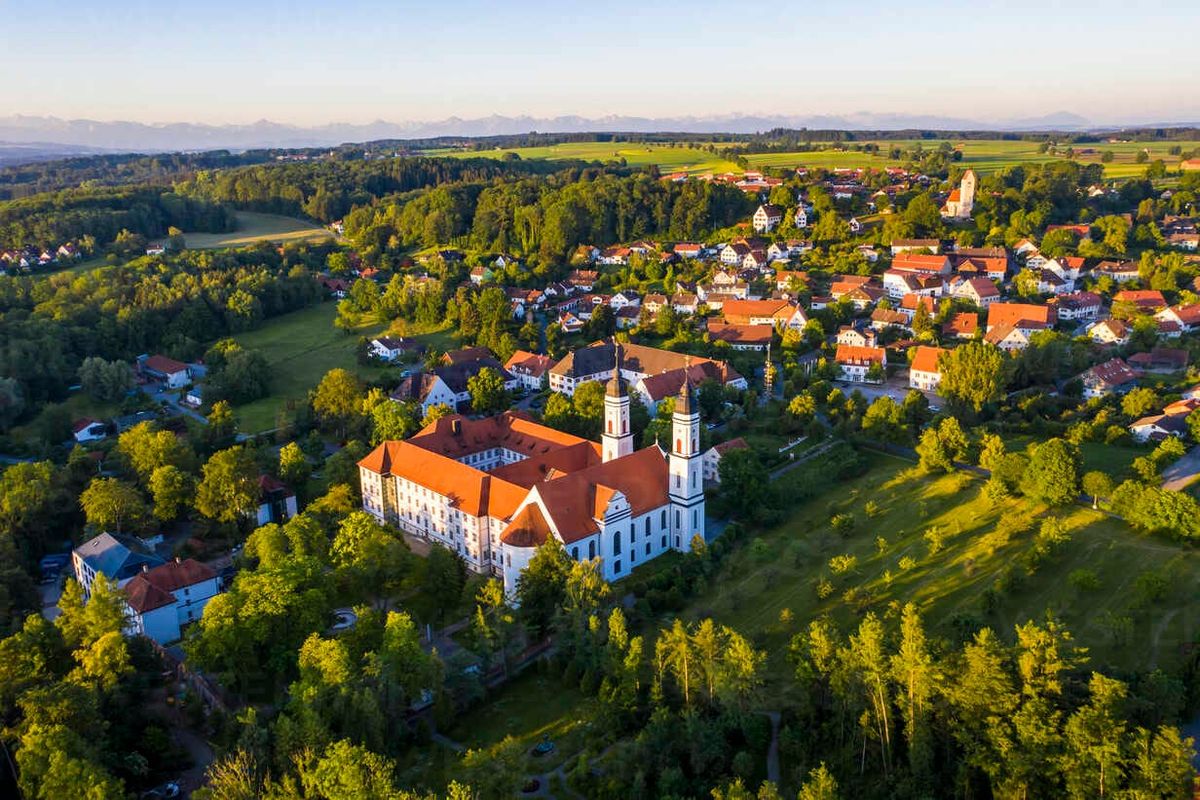
For four years my family and I lived in the idyllic southern Bavarian village of Irsee, a hamlet with its own brewery and cloister. Bell-bedecked cows marched by our house each morn and eve. A tiny lake at the outskirts featured somewhat hostile swans that battled summertime swimmers.
We always looked forward to Christmas here in Germany, so much so that we adopted some of the local holiday customs. My two sons would be whisked out of the room for a short walk only to find upon their return the Christkind's (Baby Jesus's) handiwork: an ornamented tree suddenly ablaze with candles, presents arrayed beneath it.
Later, with the children packed off to bed, we settled into our cups. We adults ate, drank, talked and heard various folk carols and the farmer's mass done in the local Swabian dialect on the radio.
This assemblage of Americans and Germans was saving the exchange of gifts for later as was understood. In the meantime we sipped Glühwein (hot red wine with cinnamon and cloves) and Moselblümchen wine as the snow accumulated on our hand-carved balcony. As we, along with the evening, slipped into night, midnight approached. The time when the older generation went to the candlelight service.
As one is sometimes wont to do on such occasions, recollections of past fun and fellowship came pouring in. Singing "Here We Come a-Wassailing" after the later service, going to the neighbors spreading "Christmas cheer" and feigning the hearing of Santa's sleigh on the roof for the kids—growing up and old in America's Pennsylvania Dutch country.
For some reason or other, I ended up going to my first church service in a number of years, even if my German wife and our friends weren't interested. The 90-year old lady from across the hall was going and I decided to tag along. The spry little woman, who was like an Oma (grandmother) to our children, put on her heavy winter coat before the two of us braved the cold together.
Once a seamstress in what is now the Czech Republic, "Gusti," as we called her, had been forced to leave home along with the rest of her family, all now dead, in the closing days of the Second World War. She too was a victim, if an indirect one, of Hitler's monstrous crimes. She, along with millions of other Germans living in Central Europe, was subjected to a wave of unlamented ethnic cleansing—after the Soviet army swept through at the zero hour—from Szczecin to Karlovy Vary to Brno.
Die Fluchtlinge (literally, the fleeing ones) came to West Germany. Their collective one-time support for the Nazi Party now nothing but a bitter memory of self-deceptions and the broadest of human betrayals. Already war-ravaged, their countrymen and women greeted them with something other than enthusiasm, as these bedraggled masses crowded into West German homes. Like many of the people "from the East," Gusti had settled in Bavaria. Unlike some among the older generation from Schlessien, Ost Pommern and Ost Preußen, for Gusti, the past was past.
Anyway, all that was many years ago. And tonight it was Christmas Eve—a time of magical childhood memories, cookies of the most delicious and visually enticing varieties, a time of fun and laughter, candles in windows, peace and goodwill.
We had arrived a bit late and had to stand in the back of the packed church. The organ boomed with Bach. We weren't sitting in a pew like back home and I didn't know many people, not having lived there very long. But it was a good, warm feeling in spite of the fact that the huge airy church was quite chilly. It was an older crowd. The music was magnificent and with the onset of the candlelight so was signaled the climactic song Stille Nacht, which in Germany is never sung until midnight on Christmas Eve.
But the feeling was different to me this year—emotion was present, there was no doubt of that—as I looked over to the usually jovial Gusti, who stood staring ahead like a stone. And then I heard it, even before, during and then shortly after the beautiful singing. It was sobbing. Everyone in the church was weeping.
This wasn't the tourist-voyeur Alpine atmosphere I had anticipated strolling into the church. This was the place for it alright, but I was not witnessing some American notion of quaintness or ambiance. It was reality.
And slowly, repressed images I had absorbed from people in town began coming into focus—images not normally visible to an American who grew up in a bomb-free land during the war…the woman up the street who had said "anything but another war—it means losing your father, then your brother, then your husband, then your son and then your other son and never finding out why."
In that rush of emotion, I remembered a line from a letter among those published in Letters from Stalingrad, a collection written by German soldiers to their loved ones before meeting their certain doom. "Father I know I can never be forgiven, but I haven't found my way to your God—I searched for him in every burning Russian village, at every trench where my comrades lay bleeding. He did not reveal himself to me, He may be somewhere there among your church records, but he is not in Stalingrad."
Stille Nacht, Heilige Nacht…the sobbing was unbearable. Why couldn't they stop? Didn't anyone tell them that older Germans are supposed to be unemotional? And then it seemed like I could see what they were seeing…the other old refugee woman named Mitsi from the third floor who had nothing but flour and water to feed her and her baby boy; as an adult her bones now broke at the slightest tumble…the Nazi extermination industry which murdered six million Jews, handicapped people, gypsies, gays, trade unionists and dissident intellectuals…human torches running screaming through Dresden…fear of Russians…Russians' fear of them…unending hate propaganda devised to inspire one man to kill another because he was French. Or English. Or German.
And then it was over. People were wiping their eyes, standing up and going about the business of pushing their way out to go home. I glanced over at Gusti—I still believe she was the only person in the church who remained dry-eyed, perhaps because she had shed all the tears she had, having lived so many Christmas Eves. Perhaps her calm was a self-imposed discipline which helped her stay alive for so many years.
Gehen wir, she said—let's go.
Back home everyone was laughing and having fun—the warmth, it hit me as Gusti and I entered our home.
I'd gone to candlelight service in Germany—how could anyone be joking or laughing? My wife's smile folded when she saw my expression. "Oh, it was so sad," I told her incredulously, in response to the kind of Christmas cheer that was too familiar from my youth. Then it was obvious, the thing we call the "holiday season" at home is different in lands whose peoples have known war on their soil at Christmas time. Ja, so ist es immer. "Yes," my wife then responded evenly, "it always is."
For readers interested in learning more about the way many Germans look at the Christmas season, I highly recommend Stanley Weintraub's stunning Silent Night: The Story of the World War I Christmas Truce.