Mulholland Drive as Window into Our Looming Untergang
10 May 2005
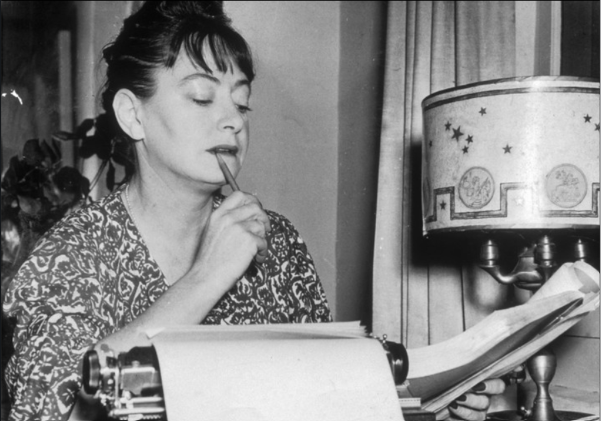
'What fresh hell is this?'
--Dorothy Parker
This thing is a vision of hell. It's an honest film – a shard of a shattered place. And yet, although it is strewn, it is interpretable. It could be rather more clear than many imagine. David Lynch, Eagle Scout from Missoula Montana, has made his bones in the Belly of the Beast: Tinsel Town USA. You starting to get the picture yet?
Some - as I did until last night - might want to adhere to Lynch some cohesive narrative point. This doesn’t seem to work. A different approach may be more fruitful: take emotions, truisms and cautionary tales from the surreal vignettes he stitches together. Billy Ray Cyrus, everyman hick extraordinaire cucks then kicks the shit out of Hollywood Big Shot Adam Kesher. You've got leads.
Like most great films - Lost Highway, the kissing cousin of Mulholland Drive, would be included along with Kubrick, Fellini and Cassavetes. Their work is rooted in some abstraction, sure. But they're really dealing in rather basic human experiences. Things like: cruelty, despair, hope, overcoming, failure, perseverence, love, hate, futility, and spirit. Mitch and Murray paid good money for those leads.
The role of experience seems occasionally transparent in the film in question. This twisted road up in the Hollywood hills was named for an early 20th Century city father of Los Angeles. He was a brutal man who brought water from the Owens valley to the burgeoning desert at the foot of the San Gabriels. The leads are weak? The fuckin' leads are weak!? You're weak.
He killed a variety of people, as well as the odd Mono Lake region community. A variety of people tried to bomb his pipes and kill him. But, he won - and is remembered fondly today. That's a specific which illustrates the oldest joke of all: the human condition. You see this watch? You see this watch?
As to narrative instances of life experience... it could be that the director Adam Kesher is a reflection of a young and arrogant Lynch - one that is ancient history? Or maybe Lynch is merely lampooning someone he finds distasteful - or an archetype. Does a guess make a difference? Oh, I know, an anti-Semitic slur?
At one time: the director/artist can be helpless creatively when faced with the exigencies of the Hollywood system. At another time: s/he is a rich, arrogant prick who becomes swallowed by the system. The self-understood rebel eases into establishment lures and snares.
Rather a metaphor for the “hippie” generation - the ones who were notably instrumental in creating modern Hollywood and Silicon Valley. Everything becomes integrated into the maw of the money system. So, one might also imagine that Kubrick’s consistent approach: “man’s inhumanity to man” was picked up rather early by Mr. Lynch.
Another Kubrickian trope showed up - Eyes Wide Shut being the most obvious example - the existence of powerful, inscrutable economic forces, which act on even the lower elite with a degree of severity difficult for ordinary people to imagine. (Lynch explores the working class element of this phenomenon in Blue Velvet.)
Hard to understand... but it seems more than likely that Lynch has had some dealings with pieces of the tippy top. And Mulholland Drive graphically illustrates just what he thinks of them. He loathes and despises - to the core of his being.
Those slow tracking shots above downtown L.A. have more than a little feel of a bomber’s sight. There's a big difference between flying planes into builings and flying planes dropping things onto buildings - so we are told.
It does seem intuitive to imagine that the higher up you go - the less daily existence impinges on the elite individual - the more life and the humans actually struggling inside of it: become pawns in a game rather less sophisticated than chess.
The people at the top get human smallness. Too many of them have decided to take the easy route - to rape it to the hilt. This is one point Mr. Lynch is making it would seem.
There are a host of additional themes which get dealt with: the matter of identity and how malleable it is; the intertwining of sex and cruelty; women as disposable objects; a return to the do-wop 1950’s world of music. This is an over frequent motif generally speaking.
However, Lynch carries it off much better than most. Too evident it is: the fake sheen and sparkle of happy love songs in an era of segregation. It is beyond phony. It is monstrous - alone - in its cutesy presentation and performance.
Since Lynch is a genius, he also manages to throw in heavy doses of humor and absurdity. There are moments of levity. Casting Billy Ray Cyrus as the plumber who screws Adam’s wife in his mansion? A master stroke. That Adam responds to this flagrantly unapologetic betrayal - probably deserved - by pouring paint on his sick wife’s jewelry is further pregnant.
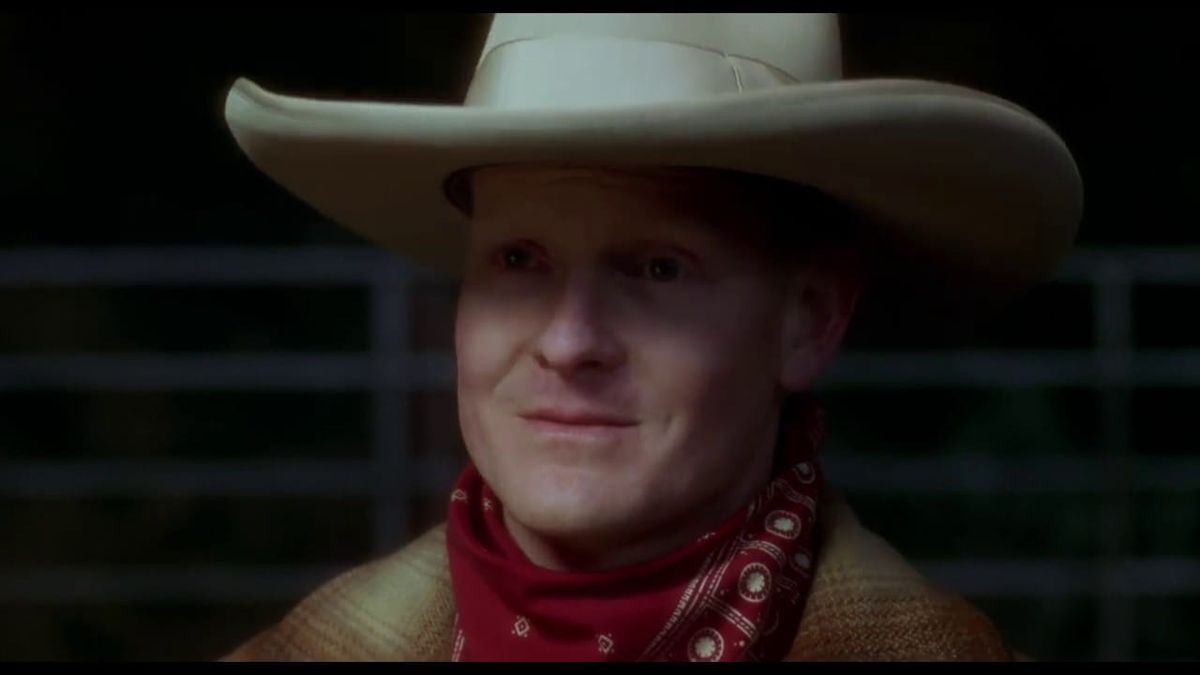
The Cowboy was my favorite character. Here Lynch appears to be openly didactic, which is unusual. Lynch was born in Missoula, Montana - the Eugene of Big Sky country. A few strange things have happened there. (At an old frontier-era fort at the edge of town, Italian-Americans were interned during the Second World War.)
One might imagine that the Cowboy is depicted somewhat sympathetically for this reason alone - Lynch's quasi-rural sensibility - and hence: his simplicity? The Cowboy is part of the power structure, yes. But one might notice that he speaks plainly and openly to the obnoxious Hollywood director - up in the hills at his satanic, flickering ranch.
Then there is the matter of lesbian desire, if not quite love. Wow, that was rilly, rilly effective eroticism - and I can usually take or leave that often overdone stuff from a titillation point of view. Of course, it was as good as it was since it was rather soft. "Kissing dark and long..."
Then there is the inevitable matter of betrayal and the often resultant degeneration. Rejection can cause rot. The contrast between the fresh facedly gorgeous Naomi Watts, as she buoyantly strolls out of LAX with the seniors - is represented with a graven severity. She becomes ugly - used up, really - internally and externally - long before the mixed up end.
The recurring, dreamy role of the diner could be construed as follows: people do the same thing day in and day out - evading their fears. And when they muster the courage? Well, that neurotic fellow got his when he went behind the restaurant.
It may have killed him - just like the “singer” at Silencio later on. The tape keeps playing - live or dead. The recurring, rich, off-handed act of murder explains itself. It was made by an American - this operates on an interpersonal level, on an inter-state level. Whichever - it don't matter.
My second to last favorite scene was the opulent dinner party. Shape-shifting Rita invites Naomi Watt’s now debased character: to supposedly smooth things over. There is more recurrence - the back of the limousine. Except: casual, immediate, attempted assassination wasn’t the order of that particular night. It will be casual, slow burn assassination at a mansion on Mulholland Drive.
We’ve all seen or had done to us something akin to this; or, we've seen it in a different movie picture show. A social setting that one has a certain foreboding about - and yet we ignore our instinct. This is always a mistake - if you're honest. Most want to belong - so, we show up anyway. And what happens? The standard operating procedure: casual cruelty.
Lynch’s depiction is, as is his wont, extreme - but maybe he is simply showing us a world that we lack entrée into. Most think they want to be there. A mistake they'll never get to make.
Adam bares shark’s teeth; Rita ignores Watt’s character. She's too busy fondling Adam. She gets around to gratuitously, lollingly French kissing the mediocre (but attractive!) tart - the one the obscure cappuccino-spitter earlier demanded - and got.
A teetering Watts is interrogated by Adam’s doppelganger-mother at the dinner table. Mom's fake, elongated concern is reflected finally in a patting of the hand. Watt’s broken face becomes lacerated with tears. And no one cares, much less notices. That would be: gauche.
It was almost too much to take: the way it ended. I’d seen it before but had forgotten or perhaps didn’t really want to remember. The fond ghosts haunt her from her first day in Los Angeles. Even they become daemonic specters - they drive her to the obvious - after she just can’t bear the viciousness: one moment longer. Her's is an act of true impetuousness... Her life? As ours all are: wisps of illusory smoke.